
Blog
A View Worth Getting Lost In
A place to slow down, take in the endless horizons, and discover the quiet beauty of Georgia’s breathtaking highland lakes.
There is a moment on the road through Javakheti when the landscape seems to open up endlessly. The hills grow wider, the sky feels closer, and suddenly, a lake appears where you least expect it. Then another. And another.
Welcome to Georgia’s lake country, a highland landscape shaped by volcanic terrain, open grasslands, and waters that reflect the changing moods of the sky. Here, the beauty is not concentrated in one famous viewpoint. It unfolds slowly, mile after mile, inviting you to take the longer road and see where it leads.
A Landscape Full of Surprises
Start at Paravani Lake, the largest lake in Georgia by surface area. Sitting high on the Javakheti Plateau, it stretches towards distant mountains beneath an enormous sky. The view feels almost otherworldly, especially when the wind moves across the water and clouds cast shifting shadows over the surrounding hills.
Not far away, Saghamo Lake offers another perspective. Its quiet shores and open surroundings are perfect for taking a break from the road, watching the light change, or simply enjoying the feeling of having nowhere else to be.
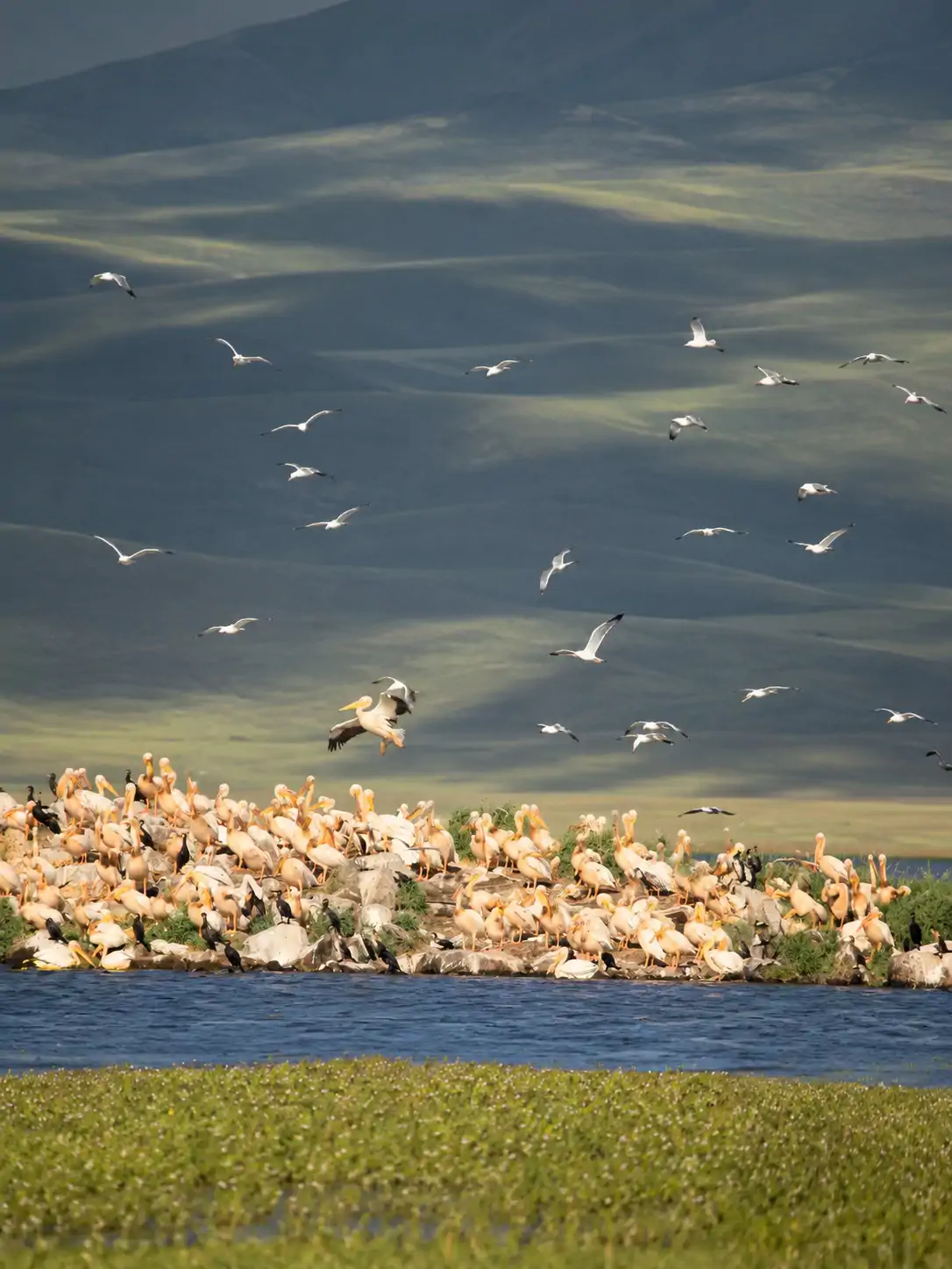
But the real magic of Javakheti lies in its variety. Khanchali Lake and Madatapa Lake reveal a wilder side of the region, where wetlands provide important habitats for birds. Depending on the season, you may spot pelicans, cranes, and other migratory or nesting species moving across the water or gathering along the shores.
Every stop brings a different scene. One lake feels vast and open, another feels intimate and still, while others come alive with the movement of wildlife.
Follow the Birds
In Javakheti, the sky is part of the experience. The region lies along important bird migration routes, making its lakes and wetlands especially rewarding for nature lovers.
Bring binoculars, move quietly, and give yourself time to observe. A distant flock crossing the horizon or a pelican gliding low over the water can become the moment you remember long after the journey ends.
For birdwatching, the warmer months are particularly rewarding, while spring and autumn offer opportunities to observe seasonal migration. Local protected area staff can help visitors find suitable observation points and understand which areas are accessible.
Take the Road Less Rushed
The best way to explore Javakheti is to leave some space in your itinerary. Stop when a view catches your eye. Take photographs, breathe in the fresh highland air, and let the landscape set the pace.
The region is also beautiful in winter, when the lakes can freeze and the open terrain takes on a completely different character. Conditions can be harsh, however, so winter visits require careful planning and local guidance.
Before travelling, check road and weather conditions, bring warm layers, and follow guidance for protected areas. Some locations near the international border, including parts of the Kartsakhi and Madatapa areas, may require special permission.
The Beauty of Going Nowhere in Particular
You might set out to see Paravani, Saghamo, Khanchali, and Madatapa. Yet the moments that stay with you may happen between them: a sudden break in the clouds, birds rising above the reeds, or the reflection of distant hills in still water.
Javakheti reminds you that a memorable journey does not always need a packed schedule. Sometimes, it is enough to follow the road, discover another beautiful view, and stay a little longer than you planned.
Come for the lakes. Stay for the feeling of getting wonderfully lost in the landscape.