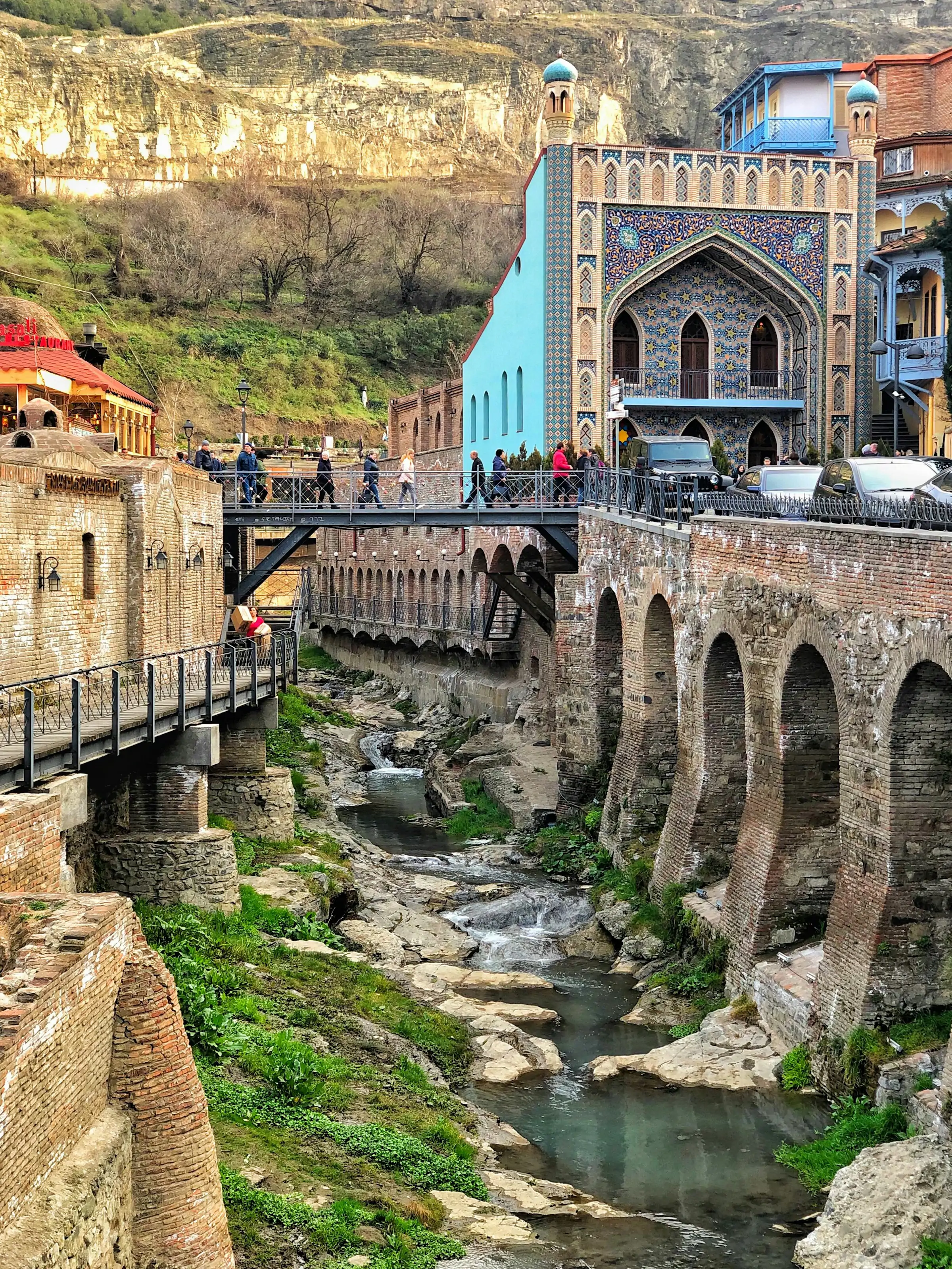
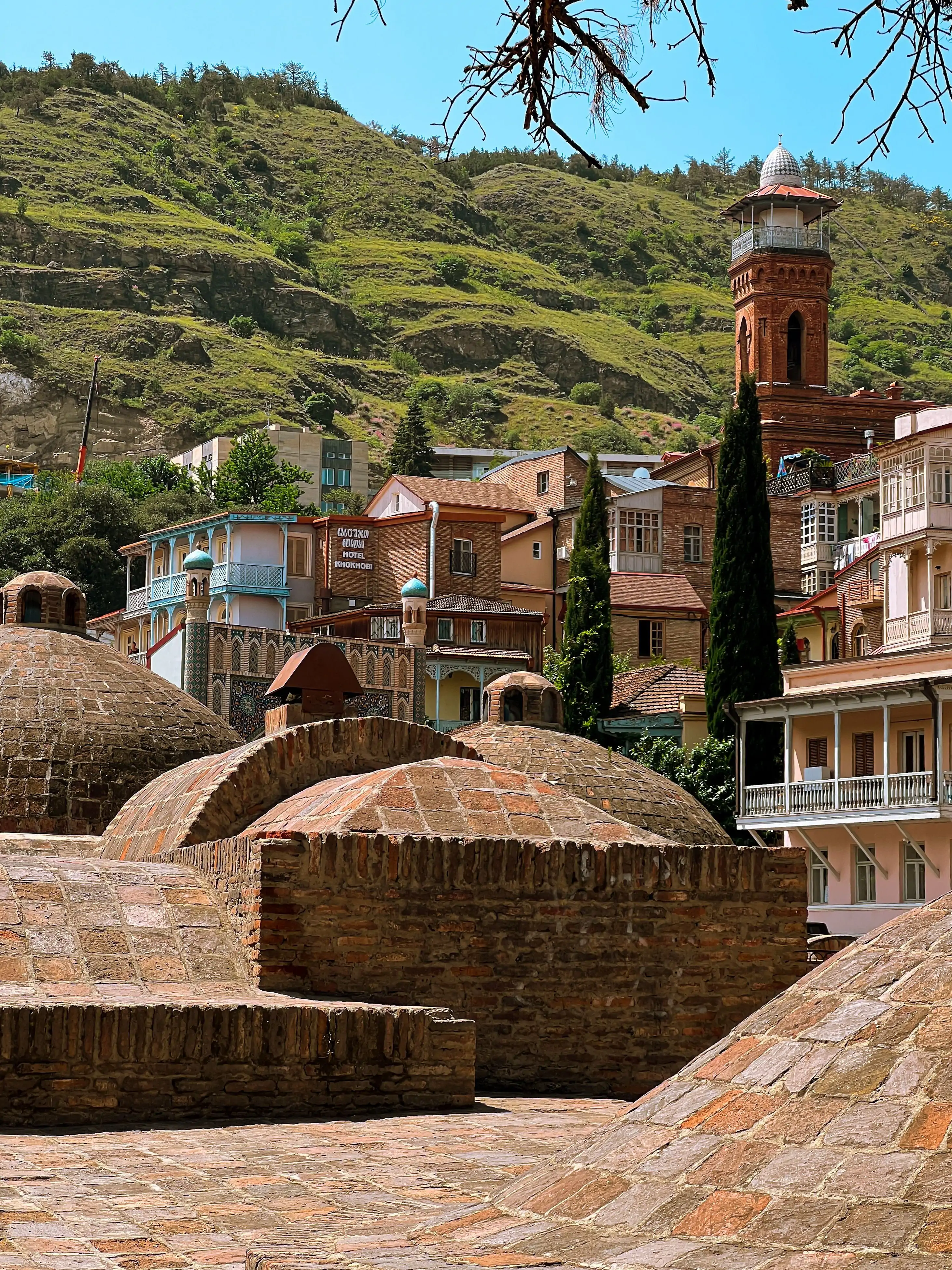
Abanotubani is the ancient district of Tbilisi, Georgia, known for its sulphuric baths. Located at the eastern bank of the Mtkvari River at the foot of Narikala fort across Metekhisubani, Abanotubani is an important historic part of the city: it is where according to a legend the King of Iberia, Vakhtang Gorgasali’s falcon fell, leading to a discovery of the hot springs and, subsequently, to founding of a new capital.
By the end of the 13th century, 65 baths were recorded in Tbilisi. During this time, the baths were free to Muslim residents.
Traveler Tips
- Explore the bath district on foot.
- Combine your visit with Narikala Fortress and Leghvtakhevi Waterfall.
- If you want to experience a sulfur bath, book a private room in advance, especially during busy periods.
- Wear comfortable shoes - some streets around the district are steep and uneven.
Fun Facts
- Abanotubani literally means “bath district.”
- According to the famous legend, Tbilisi was founded around its hot springs after King Vakhtang Gorgasali discovered them while hunting.
- The name Tbilisi comes from “tbili,” meaning “warm,” referring to the city’s hot springs.
- In the 12th century, Tbilisi had 65 baths; today, more than 10 baths continue to operate in the area.
- The famous French writer Alexandre Dumas visited the baths during his stay in Tbilisi in 1858.