The Coffee at the Bottom of the Cup
A Batumi ritual, where every cup holds a story and the last sip reveals more than you expect.
There is more to Batumi coffee than what is in the cup.
It is prepared over hot sand, served in a small cup, shared over conversation and, eventually, turned over to see what remains.
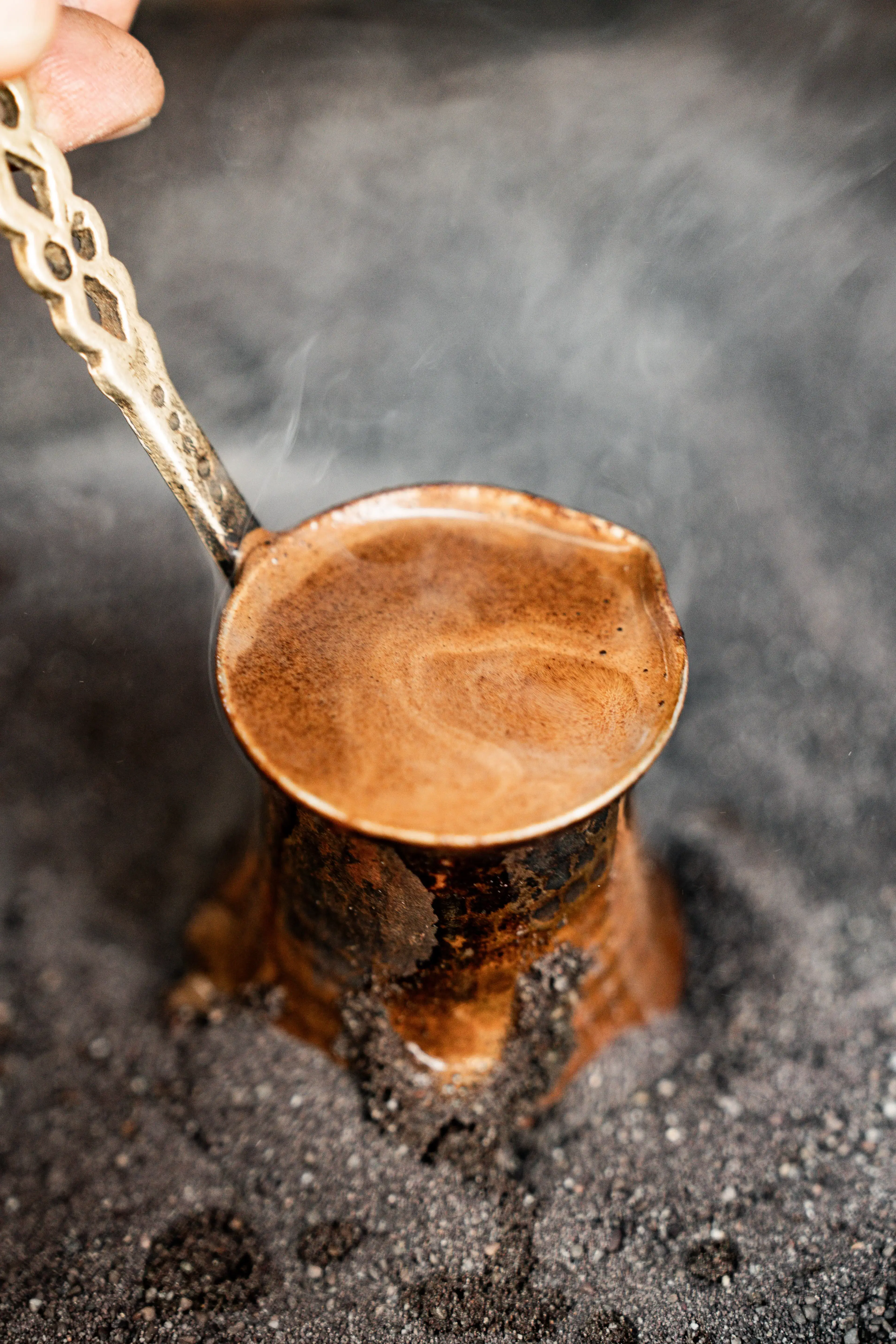
The preparation is slow. Finely ground coffee is placed in a cezve with water and, if desired, sugar. The cezve is then set into hot sand, where the coffee heats gradually. When it rises, it is poured into a cup and left to settle.
You drink it. You talk. And eventually, you reach the bottom.
That is when another part of the ritual begins.
The grounds settle into small, irregular shapes. A road. A figure. A letter. Something that looks familiar only after someone points it out.
Reading coffee grounds is part of a much wider coffee tradition in the region. In Turkish coffee culture, the finished cup is traditionally turned upside down and left to cool, after which the shapes left by the grounds may be interpreted as a form of fortune-telling or simply as entertainment.
You do not have to believe the cup can tell the future. You only have to look.
Coffee In a Port City
Coffee has been part of Batumi's urban life for generations.
By the beginning of the 20th century, coffeehouses were already part of the city's landscape. Historical accounts cited in Georgian sources mention six coffeehouses operating in Batumi around this period.
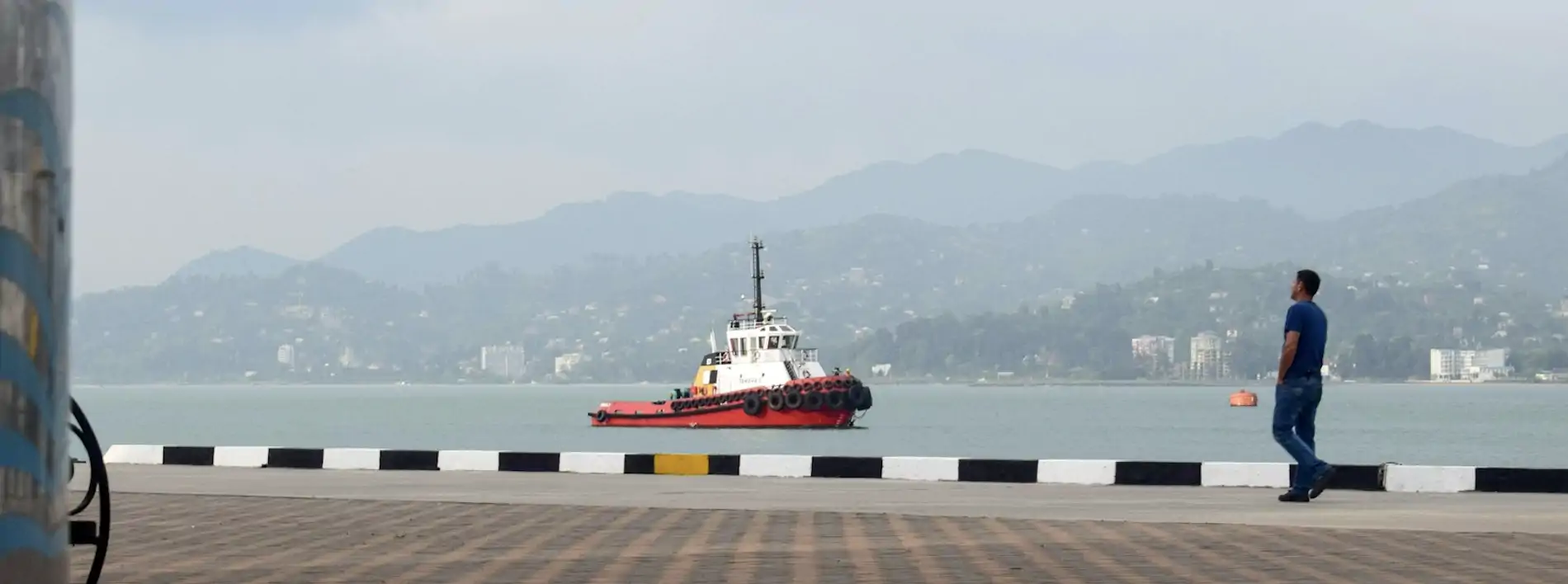
This was a city changing quickly. Batumi was developing as a major Black Sea port, bringing together people, goods and customs from different places.
Coffee became part of that public life.
In 1920, the Russian poet Osip Mandelstam visited Batumi and wrote about the city's coffeehouses. His account also mentions coffee prepared in hot sand - a detail that places the method within Batumi's early 20th-century coffee culture.
The exact route by which the sand method became established in Batumi is less certain. What is clear is that coffee, coffeehouses and the ritual of preparing the drink had become part of the city's everyday life by then.
And the sand became part of the way Batumi made its coffee.
The Sand
The method itself is simple.
Finely ground coffee is placed in a cezve with water and, according to taste, sugar. The pot is then nestled into heated sand, which surrounds it with heat and allows it to warm gradually.
The coffee is watched as the foam begins to rise. The cezve is lifted, returned to the sand and lifted again before the coffee is finally poured.
The sand is part of the experience as much as the preparation.
You watch the small pot disappear into the heat. You wait for the coffee to rise, then watch it closely as it nears the edge.
By the time the cup reaches the table, you have already seen the drink being made.
What Remains
The last sip is not quite the end.
Turn the cup over and leave it for a moment. The remaining grounds begin to settle against the inside of the cup, forming shapes that are open to interpretation.
The practice is part of a wider coffee culture. In Turkish coffee tradition, a finished cup may be turned upside down, left to cool and then read according to a set of familiar symbols. The ritual can involve wishes, predictions and conversation.
In Batumi, too, the cup can become a reason to stay at the table a little longer.
Someone sees a road.
Someone sees a person.
Someone sees a letter.
The meaning is almost secondary.
The conversation is the point.
Still Part Of Batumi
Batumi has changed around its coffee.
The port is still there, but the city around it has grown taller and busier. Its coffee culture now stretches from traditional sand coffee to modern cafés and specialty coffee shops.
But some of Batumi's older coffee traditions have taken a different route - into people's homes and kitchens, and into locally made coffee that is still part of everyday life.
One example is Sumbata, a family-run coffee business that has been operating in Batumi since the 1990s. The company was founded by Sumbat Top-Bashiani and is now run by his son, Arut. In 2026, the brand began expanding beyond Batumi, with its sediment-style coffee becoming available in shops in Tbilisi.
It is a different kind of continuity. The old coffeehouses may have changed. The city has changed with them. But the habit of sitting over a small cup and letting the conversation continue still belongs to Batumi.
A cezve.
Hot sand.
A small cup.
A conversation.
And, at the bottom, a little coffee left behind.
Finish the coffee. Turn the cup over. See what remains.
- Published
- October 22, 2026
- Words by
- Anano Atabegashvili